A trend list is a starting point, not a training plan.
The ACSM fitness trends forecast for 2026, published in October 2025, drew on a survey of 2,000 clinicians, researchers and exercise professionals. It ranked wearable technology first, mobile exercise apps fourth and traditional strength training seventh. It is an industry forecast, not a measurement of what everyone did in 2026 or proof that a particular product works.
As the year draws towards its end, the useful question is which of these ideas deserves space in your own routine. A new device, class or app should have a job you can describe. That might be keeping a clear record, making a session easier to start or helping you enjoy turning up. Popularity alone does not decide that for you.
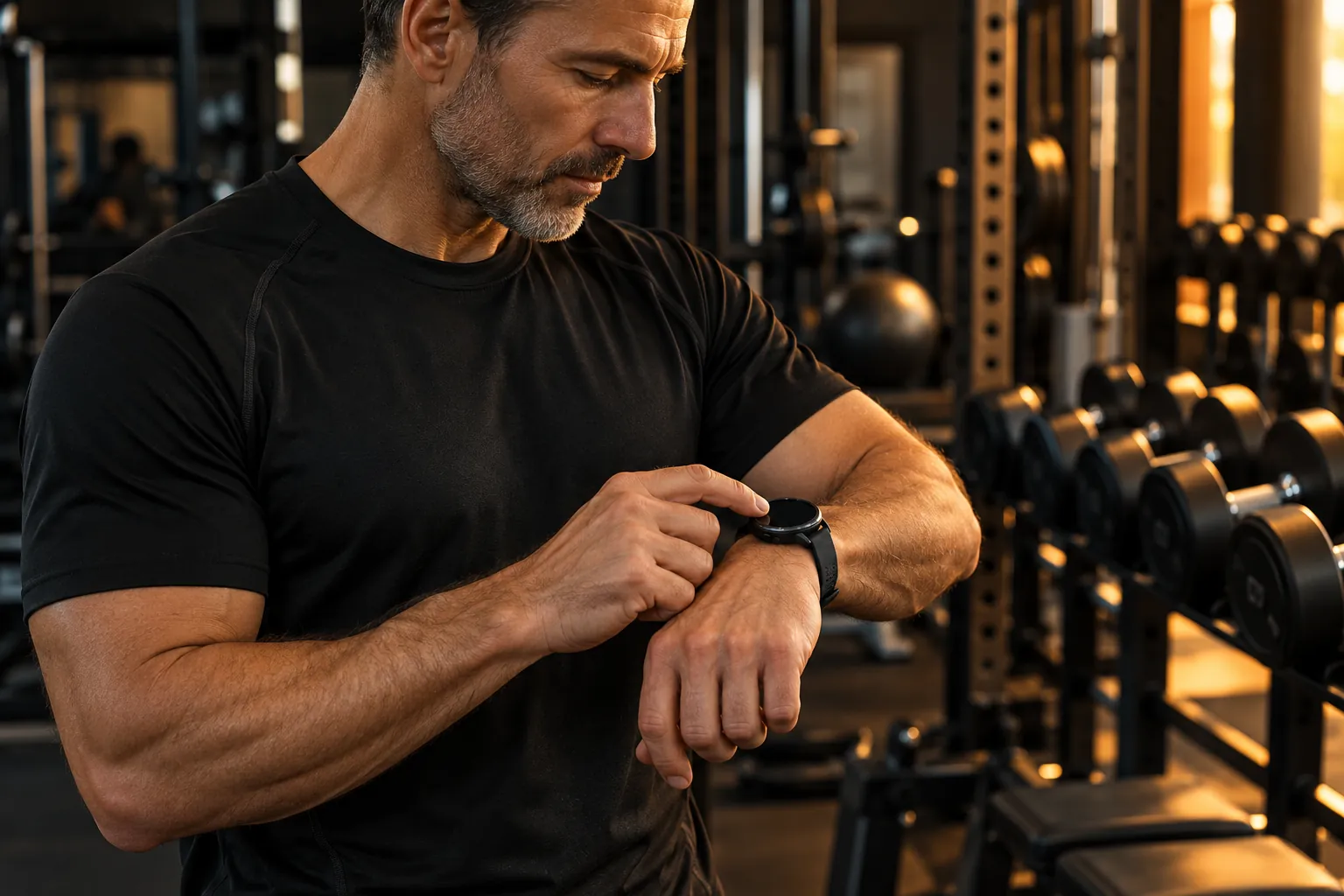
Wearables: decide what you want the number for.
Before adding another dashboard to your day, choose the question you want it to answer. Do you want a record of time spent moving? A way to compare similar sessions? A place to keep sleep estimates alongside your own notes? Those are different tasks, and a single score can hide the distinctions.
It helps to keep the source of each number visible: device measurement, estimate or manual entry. An empty field can be more honest than a plausible guess. Hyperion's article on timers, measurements and logged work explains this distinction in the context of a workout. Before buying a wearable for an app, check the exact supported connection and data types; a broad integration label is not enough.
Workout apps: judge the ordinary session.
A feature list is easy to compare. The more revealing test is a normal training day: finding your plan, changing an exercise, entering a set and returning to your history afterwards. Include an awkward day in that test. What happens when you have less time, lose a connection or want to correct a mistake?
If an app includes AI, ask what it adds to that sequence. Does the suggestion respect your available equipment and recorded work? Can you change it? Our five checks for an AI fitness coach offer a way to evaluate the assistance without accepting every claim attached to the AI label.
Strength training: make your own comparisons useful.
Traditional strength training's place in the survey is a reminder that a trends article does not have to be about something newly invented. In a training log, familiar details still deserve care: the exercise, the load, the repetitions and any change that makes one session different from another.
Suppose you replace a barbell movement with dumbbells because the rack is busy. A useful record keeps that change visible. It should not make two different sessions look identical just to produce a tidy chart. When comparing software, look at the history after making an edit, as well as the attractive plan before you start.
Leave room for enjoyment and different starting points.
The same 2026 ACSM survey also highlights programmes for older adults, balance and core work, exercise for mental health, and adult recreation and sport clubs. The list covers a much wider range of interests than a single performance goal.
For your own routine, turn those broad categories into practical choices. If you are curious about a class or club, check whether its timetable, location and starting level work for you. If you prefer training alone, think about where structure would help and where you want flexibility. Enjoying the format and being able to fit it into an ordinary week are useful reasons to try it, even when it is not the highest-ranked trend.
What carries into 2027?
On 20 October 2026, ACSM published its 2027 fitness trends outlook. Wearables remain first, while mobile exercise apps rise to second and strength training to fifth. Those are next year's survey rankings, not observed results for 2027. They give another reason to ask how technology supports the work you want to do.
Choose one friction point in your current routine and use it to assess a new tool. For Hyperion, the product tour shows how planning, logging and recovery fit together, while the roadmap separates available beta features from work still in validation or planned. You can then judge the app against a real need, rather than a trend's position on a list.
Explore the app behind the story.
Meet Hyperion